Early last week, prior to hosting Navy on Saturday, Troy head coach Larry Blakeney sat in a press conference lamenting his defense’s effort at Tennessee the previous weekend. In losing the highest-scoring game in Neyland Stadium history, 55-48, the Trojans allowed a whopping 718 total yards.
Blakeney dispensed a list of shortcomings, before interrupting himself to utter something of an afterthought. There was one area, he conceded, in which the Trojans were somewhat respectable.
“Getting off the field (on third down),” says Troy head coach Larry Blakeney, “is what defense really is all about these days.”
“We’ve actually not been bad about getting off the field, which is what defense really is all about these days,” he said. “Nobody really slams anybody, but getting off the field is big on third down and getting them to punt it to you.”
So this is where we are today in college football. Understand that offenses are going to get theirs. Just try to get enough stops to give your offense a chance to get more.
A few days after Blakeney’s remarks, Troy gave up a still-sizable 487 yards and 31 points to the Midshipmen. But by forcing punts on Navy’s first two possessions, Troy raced ahead, 14-0. After the Mids fumbled at the Trojans’ 2-yard line, Troy made it, 21-0.
The defense did enough, as the offense built a lead that proved insurmountable. Navy drew as close as three points, with possession, at 31-28, but never overcame that early multi-score deficit. The final was 41-31.
As much as such a result might offend purists who prefer low-scoring sparring matches, 72 total points is relatively tame in comparison to many 21st-century outcomes.
Rest in peace, Woody (“three yards and a cloud of dust”) Hayes, as difficult as it may be. And you too, Darrell Royal, the recently-departed ex-Texas coach who popularized the wishbone decades ago. It was Royal who cautioned, “I’ve always felt that three things can happen to you whenever you throw the football, and two of them are bad.”
Offense has evolved a long way from the days of “three yards and a cloud of dust.”
Well, in this day and age, there are few who see the game the same way. Most teams are willing to throw caution to the wind — out of the spread, of course. Why, even run-first offenses are lighting up scoreboards.
Last Saturday alone, the Mids’ former coach Paul Johnson play-called Georgia Tech to a 68-50 win over North Carolina in the highest-scoring affair in ACC football history. Later in the day, Navy’s next opponent, Texas State, lost to Louisiana Tech, 62-55.
If you’re a scoreboard watcher, be sure to read the fine print when eyeing the updates that scroll along the bottom of the television screen. It can be quite confusing.
For example, two weeks ago, perhaps you wondered: Was that 62-51 loss for USC to Oregon in men’s or women’s basketball? Uh, neither. Those were the football Trojans — not to be mistaken for Blakeney’s. Despite being directed by a Super Bowl-winning coordinator, Monte Kiffin, they were gashed for 730 yards.
The school that turned out legendary defenders like Ronnie Lott, Junior Seau and Troy Palamalu, never before surrendered so many points and so many yards. It started playing football in 1888.
Six seasons ago, the Midshipmen prevailed in the most prolific match-up in Division I history, outscoring North Texas, 74-62. The record they share with the Mean Green was threatened on Sept. 29, when — in a pairing of then Top 25 teams, no less — West Virginia beat Baylor, 70-63.
In November 2007, Navy outlasted North Texas in the highest scoring game in Division I-A history.
Current head coach Ken Niumatalolo was an assistant to Johnson when Navy outlasted North Texas in November of ’07. Since experiencing the sublimity of 136 total points in a single game, he’s seen the numbers become more and more ridiculous.
What used to be an anomaly isn’t so unordinary anymore, as teams continue to spread the field and expand the playbook in their race against time. Thirty-five times this season, a team has scored at least 60 points.
“Just the hurry-up, no-huddle offenses, what they’ve allowed people to do is (get) more plays off” Niumatalolo said. “Normally people have run anywhere between 60 and 70 snaps. Now guys are getting in the 80’s and 90’s and, sometimes, 100 snaps a game. Just those 30 more plays allow for more scoring opportunities. It wears your defense down and lends itself to higher scores.”
Niumatalolo should know. In October, he prepared the Mids for Indiana, which averaged 86.3 plays per game during a three-week stretch in September. Before last Saturday, he and his staff scouted 99 offensive reps for Troy at Tennessee, as well as 102 in an earlier loss to Louisiana-Lafayette.
Offenses are gaining an increasing advantage over defenses not merely because of the number of plays. The more plays, it seems, the more personnel groups and more formations they make you deal with. All while forcing you to cover more of the field.
It’s stressful enough trying to keep up with offensive substitutions from the stands or press box (just listen to last week’s Navy radio broadcast; on second thought, don’t). For defensive coaches and their players, they not only have to identify who’s shuttling in and out; they have to keep up with them.
If, for instance, an offense hurries to the line in a formation suggesting run or pass, does the defense have time to counter with appropriate personnel? Often, they don’t.
Oregon recently beat USC by a very basketball-like final of 62-51.
Prepping for Indiana, Niumatalolo was very concerned. The Hoosiers snap the ball quickly, about every 20 seconds. The Mids substitute freely, constantly rotating on their defensive line.
“It complicates it a lot, because they go so fast,” he said of the looming matchup. “ We’ve got to be really precise and organized in some of our substitution patterns. It’s something that we have to work on and stress. They put such a premium on their pace of what they do, it makes it hard.”
Navy eventually caught up, and beat IU, 31-30. Niumatalolo expects defenses in general to catch up too, and stem this present-day offensive wave. When they do, he suspects in time — naturally, sooner than later — offensive strategists will figure a way to forge back in front.
Long before that happens, his Mids host Texas State this Saturday.
The Bobcats are under Dennis Franchione, who first visited Navy-Marine Corps Memorial Stadium as the coach of TCU’s LaDainian Tomlinson in 2000. His offensive style differs from what Navy dealt with at Troy. Balancing the pass with the run, TSU is reliant on the zone-option read.
That doesn’t mean the Bobcats can’t put up Trojan-like numbers.
This score with 67 second left held up for No. 19 Louisiana Tech against Texas State on Nov. 10.
Granted La Tech is a sieve. At 9-1 and ranked 19th in both major polls, the Bulldogs somehow manage to overcome a defense that gives up 505.7 yards and 36.2 points per game.
Nevertheless, on their drive to 55, the Bobcats covered 577 yards, including 134 by former Navy slot back Marcus Curry.
Of their eight touchdown series, just one lasted longer than 2 minutes, 16 seconds — it took all of 2:53.
Texas State also converted 9-of-15 third-down attempts, plus its lone fourth-down try. That’s a rate of 62.5 percent on those two downs.
The Mids will need to lower those numbers. Because as Larry Blakeney reminded us, in this age of offense, getting off the field on defense is all that matters.
This story was published in the Navy Gameday football program on November 3, 2012.
In the coming days, coaches who know him well and players who know him best will echo one another on the subject of Josh Cabral, a senior offensive guard at the Naval Academy.
His head coach, Ken Niumatalolo, will concisely characterize Cabral as a “quiet, humble leader.”
“He’s not the most vocal guy in the world,” assistant Ashley Ingram will disclose, before explaining how the player he oversees on the Midshipmen’s interior still manages to speak volumes, despite a daily economy of words.
“I’ve known him for four years,” line mate and classmate Ryan Paulson will qualify, before adding: “I’ve always known him to be a pretty quiet guy, but he gets things done.”
“He’s not much of a vocal leader,” is how another senior toiling in Navy’s offensive trenches, Kahikolu Pescaia, phrases it. “Josh is a leader by example. But when he does speak, people will listen.”
By now, after nearly a full half hour of a phone conversation in which there have often been long pauses following personal questions, the talking point others are soon to repeat is easily understood.
It’s not that Cabral is uncooperative; but exactly the opposite. He patiently listens and replies to what have to seem like endless inquiries into his business as a college football player, a Midshipman, a son. His reticence is less a reluctance to respond than a reflection of someone who simply isn’t self indulgent.
The mere fact that he’s hung on this long, first for a radio interview and now for more than a few follow-ups for print, suggest something else Paulson will confirm: Cabral definitely seems to be “a cool guy.” He even laughs, absent any exasperation, at an apology for taking up so much of his so-called free period in an effort to peel back the layers of his personal story.
There’s a lot there, uncovered bit by bit, about football and family. And, naturally at Navy, football family. In the 27th minute of this Q and A, his interrogator wonders what Cabral seeks in the final weeks of a remarkably consistent and durable career.
He begins by slowly reciting the usuals. “Well, definitely beat Army,” as Cabral and teammates have done the past three seasons. “Work toward getting a bowl bid,” which would be his third in four years. He then offers the predictable, “Our goal is to win every game we go into, but…”
Cabral’s voice trails off, before it fades back in and out. “It’s been a great ride,” he assures.
And with that, Cabral suddenly shifts. His tone, like his pace, picks up. He speaks enthusiastically, without the slightest hesitation.
“I remember in 2007, on November third, when Navy played Notre Dame and finally beat them. It was actually my birthday,” Cabral reminisces, a lilt to his words. “I wasn’t being recruited then. But we always cheered for Navy, because my mom went there and my dad was in the Navy. That was just a great moment. I didn’t even know any of those guys.”
Cabral recalls eventually meeting one of the stars of that day. “Just awesome,” he says of his encounter with linebacker Ram Vela, whose leap over a Fighting Irish blocker remains one of the game’s iconic moments.
Continuing, Cabral then connects that third of November, as a teenager fixed on the television from home in Orange County, Calif., to this third of November.
“It’s my birthday and I’m playing one of my last home games at Navy-Marine Corps (Memorial Stadium),” he fondly reflects. “It’s crazy to think it’s almost over.”
Yet it all makes perfect sense.
That his birthday marks one of the most significant milestones in the modern era of Navy football. That his mother made infinitely more important history at the Academy, as one of its first women graduates. That his father devoted decades to Naval service. That his buddy, Paulson asserts, “When you think of a Navy offensive lineman, you think of Josh.”
And that Niumatalolo goes so far as to say of Cabral: “This is the mold, this is how you’re a Navy football player and a Midshipman.”
The signs — they can’t all be mere coincidences — and superlatives make it easy to see what Cabral doesn’t say. He was meant to be here, today; in Annapolis, opposite Florida Atlantic, celebrating his 22nd birthday. He was born to be a Navy football player.
Cabral is the son of all-Navy parents who met playing all-Navy volleyball.
Susan Stapler was a three-year letter winner and two-time captain in the sport, before graduating with the Naval Academy’s precedent-setting Class of 1980. After enduring the hard road of a trail blazer in Annapolis, she worked in Naval Intelligence.
Meanwhile, Dan Cabral enlisted, leaving home in Hawaii and what his son describes as an environment that wasn’t exactly island paradise. Seeking something better for him, and eventually his, a career as an aviation technician offered that much and more.
Susan and Dan had a daughter, Hanna, now 24. Then Josh came along. He grew, and grew some more, to his current height of 6-foot-3 and weight of 297 pounds. He came to embody athleticism matched by intelligence and toughness. All qualities, he believes, that are equal parts of both parents.
Though Josh’s mother rarely, if ever, dwelled on the challenges unique to her gender on the way to becoming a true Academy Firstie, he understands enough to appreciate what she went through.
“She seems to play it off as if it wasn’t a very big deal,” Josh says more than 30 years after Susan’s commissioning with the inaugural class of female grads. “She doesn’t give it, I think, the amount of respect it needs. She’s kind of happy go lucky about her time here. But I think she’s very proud of where women at the Academy have gone.
“It was definitely a lot rougher (for her) than I have it now. She’s one tough lady. The first class of women, I understand, was controversial back then, and they suffered a lot more hazing than I (have).”
If she didn’t turn back in her time, neither will he in his.
“I can’t quit, because my mom got through it,” Cabral laughs. “At least, that’s what people keep telling me.”
Those people should know, if they don’t already, there’s no give-up on the other side of the family as well.
“My dad grew up in a tough family. It wasn’t the best scene,” Cabral shares. “Joining the military for him was a way out. He made a life for himself and for our family, and gave my sister and me more than he ever had. I think that’s what motivates him.”
A little later, Cabral expounds on his parental guidance.
“(My) parents (were) always being there for me, teaching me to keep fighting through,” he says. “They were always supportive of what my sister and I wanted to do, as long as we did it with all our effort, all our might. Never quit on anything because it was too hard.”
Their message helped form the perfect makeup for this next generation of Midshipman, who wound up being recruited out of Tesoro High School. But while Navy assistant Steve Johns worked to lure Cabral to Annapolis, Susan and Dan weren’t necessarily pushing him there. If he was headed in that direction, they wanted him pulled on his own.
“They were a little concerned that I was picking the Naval Academy because I felt pressure from them,” says Josh. “But I had always, since a young age, thought about joining the military. I thought it was a great opportunity.
“When I was growing up my mom was already out, but my dad was still in the Navy. One of my best friends, his dad was a Navy SEAL…The way they talked about people they met in the service, it seemed like a great deal.”
Because Dan was based in Coronado, Josh was spared the peripatetic upbringing of many military brats. He lived near San Diego his first 10 years, before moving to Rancho Santa Margarita in the OC. Following back-to-back league titles for Tesoro, Cabral went straight to the Academy.
In time, that first year, like any other plebe prior or since, he thought about a return home.
“If you don’t think about quitting here, there might be something wrong with you,” Cabral confesses.
The parents who taught so much about persevering asked him to stick with, at least a little longer.
“My mom and dad, they would definitely support me if I wanted to leave, but they kept telling me to give it to Christmas, or give it to the end of the year,” says Cabral, who did just that. “They were right. It’s definitely well worth it, especially playing on the football team, with these people that I’ve become family members with. It’s all worth it.”
Others concur, from Navy coaches to Cabral’s brothers among the Brigade.
“I know exactly who I’m getting every day,” said Ingram, the fifth-year coach of the Mids’ centers and guards.
Every day is the operative term when it comes to Cabral. No one in the Navy program is more reliable. He went into last week’s visit to East Carolina on a streak of 32 consecutive starts.
And who Ingram gets is a quick study, whether the subject is his major, ocean engineering, or his athletic calling, blocking in an option offense.
“In the coach’s world, there are two types of players,” Ingram explains. “There are ‘rep guys.’ You have to pound (information) into their heads. And there are guys who immediately understand concepts. It’s pretty easy for (Josh). Since day one, if I told him something, he understood.”
Ingram doesn’t mean simply guard play, although Cabral has played only the one position his entire career.
“He knows every position on the line,” Ingram asserts. “He’s an observant kid and a smart kid.”
Cabral is also unselfish, willing to impart his knowledge onto others. Perhaps no one has benefitted more from his insights than a starting tackle in his first season on offense.
A year ago, Paulson was a backup on the Mids’ defensive line. But last spring, he switched sides and, in a remarkably short period, adapted well enough to earn the first seven starts of 2012 at left tackle. He credits Cabral with expediting his adjustment.
“Just being his personality, (Josh) automatically stepped into (a leadership) role and helped me with my transition,” Paulson said.
During the summer, they studied video, as well as the playbook, and worked out together. Frequently after their workouts, Cabral and Paulson stayed to improve footwork or blocking techniques.
But Cabral’s reach doesn’t stop at Paulson.
When Pescaia was summoned for a rare appearance at center midway through last month’s victory at Central Michigan, Cabral was at his side. On the field, of course, but also on the bench. As offensive series ended and they retreated to the sideline, Cabral revealed his vision for Pescaia.
“He has so much experience, there were times he would see things that only he could see, and he would talk about them to help me make the right blocks,” says Pescaia, who shares Hawaiian heritage with Cabral. “Definitely when times are hard, in preseason camp or practice, Josh is definitely there to motivate guys.”
“Josh takes ownership of the group,” Ingram says, “trying to help other guys.”
“He’s the one we all look to, as far as senior o-lineman go,” says Paulson. “He’s the definition of the Navy offensive lineman. He’s smart, tough, big. He doesn’t do a lot of talking, but he walks the walk.”
As far as Niumatalolo is concerned, nothing else matters.
“Here’s a guy who’s a three-year starter who works as hard as anybody on our team,” says Niumtatalolo. ”The adjectives run out for him, because he’s such a wonderful young man to coach. His actions tell you what kind of person he is.”
So does Cabral’s middle name, if you understand Hawaiian language like native Islander Niumatalolo. Susan and Dan chose to call their son Joshua Kekoa. Pronounced keh-KOE-ah, it means ‘brave soldier.’
Cabral jokes that he’d “probably slaughter the language” and poor mouths what steps he’s taken attempting a version of the Haka Dance, which is a specialty of several Hawaiian teammates. But setting self-deprecation aside, he’s well on his way to living up to his middle name.
This month Cabral and classmates discover if their service selection is approved. His top choice is Naval Flight Officer, which would require about a 60-pound weight loss. If he doesn’t wind up in the back seat of a plane, Cabral will land aboard a ship as a Surface Warfare Officer.
In either role, he’ll be commanding young men and women — kids in many cases — who joined the Navy for the very reasons his father did long ago. Cabral is a legacy of both an officer and an enlistee.
“I think it’s important to remember they’re people too, not just someone you can just order around,” he says of his perspective. “They’re young kids. I’ve had friends right out of high school go enlist in the Marines and be deployed over to Afghanistan. They have their own troubles and their own stories, yet they sacrifice so much for our country and each other. It’s just amazing.”
It sounds like Cabral will treat them the same way he does Navy teammates; regardless of class or position, no matter if on or off the field.
“I try my best with younger teammates and encourage them,” he says, before offering his own key to succeeding.
“It’s tough here at the Academy. But here they give you a lot of assistance. No one here wants to see you fail; teachers, coaches, company officers, classmates. You’ve got to put in the work. It’s rough, but you can get through it.”
You can do it by heeding the few words of a quiet leader. Or by observing his actions, which give you so much to emulate.
“I’ll give you an example,” says Niumatalolo. “Josh was going to miss a meeting and be late for practice recently because he had some appointments for his service selection assignments. When he came to ask me (for permission), he came in sheepishly, like he did something wrong. I had to explain to him, ‘Josh, that’s for your career. That’s fine.’
“If there’s anybody who’d be allowed to miss a meeting or be late for something, it’s him. He’s deserved it, he’s earned that right.”
Nevertheless, Cabral couldn’t justify missing a lunch-time pre-practice session with Ingram, so he asked his coach to reschedule for 6:30 in the morning. Ingram arrived at 6:25, found the door to his meeting room closed and detoured for a cup of coffee.
Upon returning, the door was still shut. Huh, Ingram thought, it isn’t like Josh to be late.
“Ashley opened the door and Cabral was sitting there, waiting for him in his full uniform,” Niumatalolo continued. “That’s him. You can count on him to be there.
“There are so many variables in sports and in life, but one constant I know for our football team and our program, you can count on Josh Cabral to do things right. To me, he is the epitome of integrity and doing what’s right at all time and all places. That’s Josh.”
Quarterback Keenan Reynolds rushed for a career-high 159 yards and a touchdown. He also passed for two scores. The Mids are 4-0 since he became their starter.
Compliments of Todd Green, following are highlights of Navy’s 24-17 victory over Florida Atlantic on Nov. 3. The Mids’ fifth straight win, it guarantees them a berth in the postseason for the ninth time in 10 years. They’re scheduled to meet a Pac-12 opponent on Dec. 29 in San Francisco’s Kraft Fight Hunger Bowl.
Although it’s been a while — too long, in fact — since I last blogged in this space, I’ve still been busy of late calling Navy football play-by-play and writing about the Midshipmen in my other professional roles of the season. Following are two recent features published in Navy’s game-day program. I hope you enjoy. And please come back soon for fresher content.
Tra’ves Bush: “The Quintessential Coach’s Player.”
By Bob Socci
October 20, 2012
You could hear Lee Sawyer’s smile all the way to Colorado Springs.
In just a few hours, he would coach the next game of his ninth season at Strom Thurmond High in Johnston, S.C., a rural patch of the South that proudly professes itself, `Peach Capital of the World.` Yet Sawyer was only too happy to take a few more minutes to share a few more anecdotes about a legacy associated with the town’s other great tradition: his football team.
Since Sawyer started coaching them in 2004, the Thurmond Rebels have won nearly 80 percent of their games, annually ranking among South Carolina’s top small schools. All that while seeking results more enduringly meaningful than Friday victories.
It’s why, for instance, Wednesday practices have long ended with what Sawyer calls life lessons. Sometimes he addresses his kids. Occasionally he invites outsiders in. The weekly moral of their message relates to life after high school, life after football. What Sawyer really wants are Rebels with a cause: good citizenship.
Perhaps no one better embodies what Sawyer wants his program to represent than someone he last coached in 2008; the young man who keeps him spinning stories in his deep Southern drawl late on a Friday afternoon.
“I could talk all day about him,” Sawyer says of Tra’ves Bush, the exemplary ex-Rebel who on this day as a Navy Midshipman awaits his final encounter with Air Force.
And so Sawyer continues, until he comes across a memory that seems to say it all.
He starts by offering a bit of background. Every summer, Sawyer tells his listener, the Rebels start out practicing in red jerseys. But as individuals distinguish themselves through on-and-off field effort, they’re awarded blue shirts.
During Bush’s career, he was annually the first to earn one. Eventually, a good number of teammates got theirs too.
But one day, well into Bush’s senior season, Sawyer was caught by surprise as he walked onto the practice field.
“All of our players had red jerseys on,” he recalled. “I wondered, `What in the world is going on?’ I called Tra’ves over and asked him, `Where’s your blue shirt?` He told me, `Coach we didn’t play well enough to wear them.'”Though undefeated at the time, Thurmond’s recent level of play had slipped below Bush’s standards. He decided that neither he nor anyone else was worthy of his honored attire. Before leaving the locker room, Bush ordered everyone back into red.
“I was floored,” Sawyer says, still marveling at the thought of a teenager holding his team accountable, while commanding the respect of so many willing to go along with him. “That’s all you need to know right there.”
If it isn’t, simply consider the declaration of independence Sawyer once made to assistant coaches. Contrary to his conservative coaching philosophy, he granted Bush the right to run a fake punt. His explanation was succinct, yet about as expansive as you can get.
“I trust Tra’ves Bush as much as anybody I’ve ever coached,” Sawyer told his staff then, and his audience now, on the fifth of this October.
Nearly 1,600 miles away, at a hotel in a cold and misty Colorado, another football coach could clearly identify. Buddy Green was about to test his game plan, as Navy’s defensive coordinator, the following morning against an academy rival.
Responsibility for carrying out that strategy would rest largely with a senior safety, and easily the most experienced member of the Mids’ secondary. As he’d often done before, Green would place his trust in Tra’ves.
Just like Sawyer. And, in fact, thanks to Sawyer.
Green first heard of Bush four years earlier, while manning the recruiting beat in the Carolinas. Bush had good grades, high test scores and an invitation to his state’s North-South all-star game in Myrtle Beach. What he didn’t have was the size of your typical Division I linebacker; or, as a result, a scholarship offer from a Division I program.
But Bush was tenacious, making him hard to overlook when it was time to select the showcase’s MVP. His North-South position coach was Robin Bacon. A few years earlier, Bacon had tutored another future Midshipman, Gee Gee Greene, during his freshman year at A.C. Flora High. According to Sawyer, his colleague Bacon described Bush as “one of the best kids he’s been around.”
Green was getting similar feedback.
“`You really need to take a look,'” Green remembers Bacon telling him. “`(Tra’ves) has everything you’re looking for in an Academy guy: character, grades, toughness.”
Never one to drop the ball, Green dropped a line to Sawyer. Twenty-four hours later, an overnight video tape arrived in Annapolis. Just as expeditiously, Green reached out to Bush.
“I loved what I saw,” Green said of Bush’s highlights. “He was relentless. He had all the things you’re looking for in a football player to make plays.”
“I didn’t know much about the Naval Academy before Coach Green called me,” Bush said a couple of weeks ago. “Initially, when he called me I wasn’t even thinking about coming here.”
But his outlook changed. As it did, his high school coach, who believed he was cut out for Academy life all along, had to make sure that Bush was certain of what he was getting into.
“For him to come from way out here in the country, with his (grades), that’s a testament to his self discipline,” Sawyer said of Bush, who ranked 12th in a high school class of 183. “When I found out Coach Green was interested in him, I knew he could handle it, but I wanted to make sure Tra’ves understood what was involved.
“I sat him down and said, `Now look, can you handle this?’ He didn’t even crack a smile. `Yes, coach,` he said. `I’ve already researched it.'”
It was the kind of conversation they often engaged in. Trust traveled both ways. Tra’ves was already fortunate to have a large and loving family foundation. Sawyer served as an extra layer of invaluable support.
“Throughout my high school years, my coach was a big factor in the person I am today,” says Bush, who learned Sawyer’s life lessons any day of the week. “He was a great mentor and a person I still talk to today, a great inspiration in my life.”
Theirs sounds like the kind of relationship one wishes for every young athlete and coach, or any student and teacher. Sadly, it’s one that not nearly enough enjoy.
And yet, it’s not the only one to benefit Bush. Since coming to Annapolis, he’s forged a similar connection to Green.
“He just made me feel comfortable about the whole place,” Bush said of his introduction to both Green and the Academy. “He’s been a great help since I’ve been here. Anything I need help with, he’s always looked out for me. He’s been a great coach and mentor since I’ve been here.”
Admiration, like the rewards of their rapport, are mutual.
For one thing, Bush’s parents, Scotty and Sabrina, don’t attend home games empty-handed. Often, they arrive bearing the main ingredient for Sharon Green’s peach cobbler.
But more than winning over Green’s heart through his stomach, Bush does it by way of his coach’s eyes. He appears to Green each day as a player dialed into the game’s finer points.
“Tra’ves is so detailed in the way he studies the opposition,” says Green, in his 11th year overseeing Navy’s defense. “His eyes are always in the right place. He wants to know very detail of our game plan. He controls what we do in the secondary.”
If there truly is such a thing as a player’s coach, then Bush is the quintessential coach’s player. Within the walls of the meeting room for defensive backs or boundaries of the field, he is the football equivalent of the old Shell Answer Man. Even when he’s the one seeking answers, others are enlightened.
“His questions in meetings help the other guys,” says Green, whose secondary is the youngest group on Navy’s roster, including several sophomores and freshmen playing extensively.
“Throughout meetings and throughout practices, a lot of times (younger guys) won’t ask questions,” Bush explains. “But you can see that they have a (puzzled) look on their faces.”
Bush’s understanding of the Mids’ defense is also enriched by his versatility. When it comes to experience, he’s got plenty of currency, appearing early in his career in Navy’s `Nickel’ and `Dime’ packages. Now he’s the regular at Rover.
Wherever he’s been, including the so-called Mike linebacker, Bush has made his mark.
Tra’ves Bush slows down Notre Dame’s Michael Floyd in 2011.
Two years ago at East Carolina, he made 14 tackles and recovered a fumble. A couple of weeks later he returned an interception 32 yards against Arkansas State, bettered only by a 49-yard return for a score last season at Western Kentucky. One of three career thefts in 18 starts, his `pick six’ against the Hilltoppers was the greatest highlight of an ECAC All-East campaign.
Bush shows the hands of a true defensive back, while wearing out opponents with the mentality of a linebacker. Most importantly, he has the football IQ to understand the distinctions between the two.
“At linebacker you can be a lot more aggressive than in the secondary,” Bush explains. “At linebacker, if you have a ball thrown over you, you have the secondary behind you. At secondary, if they throw the ball over your head, it’s six points.
“I played linebacker all my life. Then when I came here, I got moved to safety. Sometimes I’ve got to try to be more passive because I’m the last line of defense.”
Attached to that line is the anchor of Navy’s secondary.
“You need a guy back there with confidence,” Green asserts, “and a great understanding of what we do.”
When Bush was younger, `that guy’ was 2011 graduate Wyatt Middleton, his predecessor at Rover.
“That’s the role I’ve been preparing for so long, being behind Wyatt,” Bush says. “Everybody knew he was a great player, but what people fail to realize is that he knew everything about the defense. If you had a question about anything, he knew (the answer).”
Sounds familiar, doesn’t it? Edit Bush’s words into the present tense, and you’d think he’s talking about himself.
But the last time the Midshipmen were at home, on Sept. 29, they were left without Middleton’s one-time understudy, and their current go-to guy.
On the third play of San Jose State’s opening series, running back Tyler Ervin charged into a hole created by the right side of his offensive line. Bush sped forward, closing in on the ballcarrier. Helmets lowered and heads collided, causing Bush’s second concussion in as many years.
Seventy-two hours later, following a totally-inactive Monday, he remembered only running to make the tackle, before lying on the field. What occurred in between, literally a knockout blow, remained a blank only others could fill in.
But as the week unfolded, Bush cautiously met all the baseline criteria to ease into action. And by the time the Mids departed for Colorado Springs on Thursday, he was cleared to play. Assuming he stayed symptom free, Bush would have a prominent role defending the Falcons.
As much as he told himself not to rush back, Bush returned in a hurry. He had celebrated an overtime win over Air Force as a plebe, when Navy captured the last of its seven straight Commander-In-Chief’s championships. More recently, he lamented two close losses, including last year’s one-point overtime decision.
“It stays on your mind,” Bush said of the 35-34 defeat in 2011. “Throughout winter workouts, spring ball and the summer, that’s all you’re thinking about.”
His mind at ease, Bush returned. And three minutes into the 2nd quarter, his Mids trailing by four, he took part in an early turning point. Falcon fullback Broam Hart was hit by Cody Peterson, losing the football at Navy’s 24-yard line. Bush scooped it up and ran 15 yards in the other direction. The Mids capitalized on his recovery, redeeming it for a seven-play, 61-yard drive to a 10-7 lead.
Much later, with Navy ahead, 28-21, in still another overtime, Bush assisted on a second-down tackle. It was his team-leading 12th of the afternoon. Two more snaps, and two more stops by the Mids, and he was celebrating with his teammates.
The victory was as important as any in Bush’s career. It was at the expense of a rival academy, and decided with high drama. And, with Navy at 1-3, it was the kind of win that could salvage a season. The following Friday, in fact, the Mids improved to 3-3 with a rout of Central Michigan.
Imagine what it must have been like for Bush in the hours after marking his return in such a significant way, considering how he felt just a few days before.
“As a young child it was my dream to play college football,” Bush said in a hushed voice, still uncertain at the time whether he’d be ready to face Air Force. “Now I sit back and sometimes think, I’m actually living out my childhood dream. It’s a real humbling experience.”
Made possible by hard work, rooted in humility; the kind he observed from his mother and father, who labored in a textile and fiberglass plant, respectively.
“They’ve always wanted the best for me, and my brothers and sisters,” says Bush, whose three siblings range in age from 4 to 13. “Just seeing them work hard pushes me to try to do my best.”
Bush’s family didn’t just set examples; they fed his dreams with a steady diet of encouragement. They also sounded a constant and consistent message about schoolwork.
“His mother and father are great, hard-working people,” Sawyer assures. “His grandaddy and grandmother are good, solid people.”
“I have a big family on both my mom’s and dad’s sides,” says Tra’ves, who jokes that his uncommon, if not unique first name has “no cool story behind it” and was simply suggested by an aunt. “The way I was brought up, grades were always number one. I always had a lot of help. My parents were always supportive.”
So were friends and neighbors, like Sawyer.
“A lot of people helped me,” Bush says. “I had the right people push me. People were always encouraging me down there.”
Bush would like to pay them back by paying it forward. According to Sawyer, he already has by reaching out to the kids who came behind him at Thurmond.
For instance, there was the time Bush, then a Naval Academy plebe, addressed a letter to the Rebels. They were in a rare losing rut — all of two games. He challenged them to climb out of it. Sawyer was so impressed by Bush’s words, and the thought behind them, he faxed a copy of Bush’s missive to Buddy Green.
Obligations as a Mid, especially one who has his own football schedule, keep Bush from regularly returning to Johnston. But when he can, he does.
“He very seldom gets a chance to come back,” says Sawyer, who nonetheless shared the thrill of Bush’s `homecoming’ appearance on Navy’s visit to South Carolina last season. “(But) the last couple of years, he’s had a week off at Thanksgiving.”
And since South Carolina’s Upper State championship game falls on that holiday weekend, Bush and Sawyer had a deal. You qualify, and I’ll be there. The Rebels missed out in 2010, but not last fall.
“That night (we qualified) I called him and said, “I want you there,'” Sawyer recounts. “Tra’ves came and talked to the boys on Thanksgiving morning.”
Bush showed up in his Navy warm-up gear.
“At the end, he told them, `I want you all to know one thing: I’m proud of you guys,'” Sawyer continued. “You could see some of the guys tear up. They were so proud of him.”
Sawyer describes the kids he coaches as a “bunch of country boys who can run and hit.” In any given year, a couple of them are recruited by college teams, usually at the Division I-AA or II levels. But here was Bush. Not only does he play D-I; he does it for the United States Naval Academy.
In less than a year, preferably as a Surface Warfare Officer, Bush will go from the Peach Capital to seeing the world.
“It’s something I’ve always dreamed of,” says Bush, an Economics major. “I never really got out of state (in my youth).”
Wherever his adventure leads, however, Bush won’t be leaving Johnston behind.
“Coming from where I come from, you don’t get a lot of opportunities to see a lot of good athletes that make it out, because of certain circumstances,” Bush said. “There’s definitely not a lot of help or people there to motivate the youth. It’s definitely in my plans to take on a role to help some of the young guys there understand their worth, and not give up on their dreams.”
He’ll stress the same thing to them that he does to his brothers and sister.
“The biggest deal is the academics,” Bush says. “I try to make sure they’re staying in the books and keeping their grades up. That’s the biggest thing that can open doors for you. I wasn’t heavily recruited in South Carolina (but) my grades made it a lot easier for Coach Green to come and recruit me at such at late stage.”
When his military duty is done, Bush wants to be a coach. Green expects he’ll be a “great” one. Regarding Sawyer’s view, well, a recent dose of deja vu suggests the same.
Like so many times before, Sawyer sauntered out to practice. Thurmond had won the weekend before, only their performance was less than stellar. As Sawyer reached the Rebels, they had him seeing red.
Once again, as in the fall of 2008, he summoned a senior to explain why all the blue shirts were missing. At that moment, Tra’ves Bush was probably off practicing in Annapolis. But, as Sawyer was about to discover, his legacy was definitely at play in Johnston.
“Coach,” Sawyer said, audibly beaming as he repeated his player’s words, “that’s just the way we did it when I was a freshman.”
It’s All Downhill From Here: The Gee Gee Greene Story
By Bob Socci
September 29, 2012
Halfway through his 27th consecutive start for the Navy Midshipmen, Gee Gee Greene was put in position to do something different.
Hundreds of other times in his first three seasons, plus two games of a fourth, he’d taken the field somewhere else. As an A-Back, the title Greene wears in the vernacular of Navy’s option offense, that someplace was almost always on a wing or in a slot, between a tackle and wide receiver.
Here, however, approaching the final minute of the first half at Penn State, Greene wandered into the usual domain of a co-called B-Back. He took up residence in the Mids’ backfield, as one of two potential ballcarriers behind quarterback Trey Miller.
From where Greene usually stood, running with the ball generally required that he motion parallel to the line, catch a pitch from the quarterback and take a sharp right or left turn. Then, almost inevitably, Greene would make a quick cut contrary to the flow of the play, before continuing upfield.
In this formation, still new to Navy, his path to the ball would be much shorter and far more direct. Miller himself was aligned several yards from center, with Greene looking over his right shoulder.
The ball was snapped, the quarterback turned and instantly gave it to Greene. Bolting from the blocks like a sprinter, he hit a hole straight ahead.
His steps didn’t chop, they didn’t stutter. They didn’t zig, they didn’t zag.
Greene ran strictly downhill from there. And by the time he disappeared under a swarm of blue-shirted defenders, he was 19 yards downfield.
Commenting on the radio, former Navy fullback Omar Nelson was aglow.
“It seems when he was able to get the ball five yards deep he just exploded through the hole,” Nelson excitedly and approvingly told listeners.
Nelson had seen Greene’s previous 180-plus collegiate carries, on which his average gain of seven yards ranked among the Naval Academy’s all-time top five. And to think, on most of those rushes, Greene likely covered twice as much ground, going horizontal before getting vertical.
Typically, as soon as he turned a corner, Greene was cutting across the grain; guided as often by natural instincts as the nature of the play.”If I see a block being set up, my conscious just tells me to cut,” Greene explains of his nonlinear way of getting from position A to point C. “It’s just natural for me to cut when I see a block developing to the side.”
Not to be misunderstood, what comes naturally has served Greene extremely well.
As a sophomore in 2010, Greene ran six times at Louisiana Tech for a whopping 14.5 yards an attempt. A year later, he amassed a career-high 92 yards on nine carries vs. East Carolina.
But in the offseason to follow, Greene got a message from his coaches. Trust your speed, they told him.
After all, few if any Midshipmen can accelerate more quickly from zero to 20 yards — Greene does it in 2.57 seconds. — or cover 40 yards faster — his personal best is 4.50 seconds.
Weighing their words, Greene worked to sharpen his strides and economize his movements. He sought to maneuver less around defenders, in favor of simply running past them.
He started, in a sense, to retrace his steps.
“In high school, we ran the triple option, but we ran it more out of the shotgun,” Greene says of his role at Richland Northeast in Columbia, S.C. “I was the guy who ran out of the backfield, so I was more like the B-Back. A lot of times, I would hit it just straight up the middle. Or, it was one or two cuts and I would have a straight shot to the end zone.
“I think that style of running, what I used to do in high school, is what I’m trying to get back to now. Since I’ve been here at A-Back, it’s been more of catching a pitch and running east and west, and not running north and south.”
Except that is, on 2nd down and 15, from the Navy 26-yard line, in the second quarter of the season’s second game. Greene’s coaches had him line up in the gun and, given the way Penn State’s Beaver Stadium is oriented, run South to North. Simply get it and go.
In effect, they were putting their trust in his speed.
As for all the steps he’s taken the first 41 games of his Academy career, they seem to follow the same pattern as Greene’s path through the first 21 years of his life.
Described by classmate and teammate John Howell as “compassionate and caring” and “a real smart guy” who “keeps his nose out of trouble,” Greene seems fit to be the subject of a Navy recruiting poster.
To hear Howell and others tell it, you can picture him marching confidently and purposefully toward graduation, beneath Admiral David Farragut’s famous phrase: “Full speed ahead!”
But not so long ago, Greene was running the wrong way. Fortunately, intuition warned him to reverse direction, as if he were cutting back to avoid the over-pursuit of wasted opportunity.
As the fourth of nine children, Alexander Greene is a Junior. So, since everybody referred to his father as Gee, they started calling him Gee Gee. They still do, of course.
He is also the son of Patricia Greene, who worked in and around the Columbia area to support her large family. Her Gee Gee was the younger sibling of one brother and two sisters, and became big brother to two more girls and three more boys.
His family is the reason Greene is in Annapolis. Tragedy within that family nearly led him to an entirely different place.
Eleven years ago, one of his older sisters, who suffered seizures since birth, was beset by another. She was bathing at the time, and drowned. She was only a teenager.
“At the time, when it hit me, I went into a phase where I kind of isolated myself and really was getting into trouble,” Greene recently recounted. “Later on, probably like a year after, I realized that my family was looking up to me, and they really didn’t have anybody (else) to turn to. So I used it to help me in my family life persevere to get to where I am right now.
“I really don’t think about it as much to this day. But when I get into different hardships, I kind of think back to, `you’ve been through this’ and `you’ve been through that,’ so `you can get over this’ and move on.”
During that dark period, Greene was bright enough to hold his own in classrooms. Meanwhile, he was emerging in athletics. He began to understand a correlation between the two. And despite a peripatetic upbringing, started achieving stability through both school and sport.
“Around eighth or ninth grade, when I realized that I was pretty good in football, just through my coaching I realized that I should focus on that more,” Greene says. “I think my ninth-grade year I really transitioned. I got my grades up and really focused on football.
“It was more on my own. I had a lot of coaches who helped me along the way, and encouraged me. But I transferred to a lot of different schools, so I had a lot of different coaches from seventh through ninth grade. Finally, I was stationary from my sophomore year until my senior year, where I was playing for the same school.”
Before landing at Richland Northeast, Greene made the A.C. Flora High varsity as a freshman. He transferred the following fall, but was ruled ineligible. His chance to play for RNE came as a junior, when he joined fellow Cavaliers and future college opponents like Mark Barnes and Gary Gray. Barnes went on to South Carolina, Gray wound up with Notre Dame.
His first season, Greene earned all-region honors. His next, he was named all-state and invited to the Shrine Bowl of the Carolinas, pitting South Carolina’s best against North Carolina’s best. Taking note was Navy’s assistant coach Buddy Green.
According to a scouting profile on the recruiting website, Scout.com, Greene was 5-foot-7 and 170 pounds; apparently too small to hold the interest of his hometown Gamecocks. Staying close to his mother was a priority, and eventually, in-state Wofford College offered that opportunity.
But more important than remaining near Patricia and the rest of their family, Greene wanted to help care for them.
“We were living paycheck to paycheck, and I wanted to help them do better,” he told reporter Andrew Shain of his hometown newspaper The State last September.
The best, if not only way of guaranteeing himself a means of doing that was by considering yet another school, the Naval Academy.
“The main thing for me was having a job when I graduate and financial stability to help out with my family,” Greene says today of his thinking at the time.
It also helped that the Southern charms of Green — the one without the “e” on the end of his name, and one-time, two-sport standout for North Carolina State — proved irresistible.
“Coach Green was so persistent that I couldn’t tell him, `No,'” Gee Gee says, laughing. “Coach Green was a major part of getting me here.”
Getting here was itself a major accomplishment.
Before Greene was handed his diploma, no member of his immediate family had graduated high school. And thus when he reported for I-Day in Annapolis as a direct-entry plebe in 2009, he became the first to attend college.
His guaranteed job awaits. But already Greene is providing for his younger siblings.
“They look up to me a lot,” says Greene, who has a sister now at Coastal Carolina University. “It’s still a goal for me to help my family out, whether that’s being there mentally or helping them out financially. That’s still my goal, and I plan on doing that as soon as I graduate.”
Greene also has a very broad and diverse bunch of brothers who admire him in Annapolis.
“Everyone looks up to him, the younger guys definitely look up to him,” said Howell, a classmate who is generally Greene’s mirror image on the field, as a fellow A-Back. “He’s not afraid to reach out and help a younger guy, or help out one of us.”
Then sophomore Gee Gee Greene scores in a 2010 win over Notre Dame.
Greene touches them mainly by actions, more than exhortations.
“Gee Gee is a leader by example,” said head coach Ken Niumatalolo. “He’s a senior who’s played a ton of games. There’s nobody that’s going to outwork Gee Gee. Younger guys see that here’s someone who’s been in some big-time ballgames but still works hard. That’s the kind of foundation we want our young guys to see. His example has been meaningful to his teammates.”
Still, facing the urgency of this, his final season, the reticent Greene has at times spoken up.
In early August, speaking to Patrick Stevens of The Washington Times, his position coach Danny O’Rourke said that Greene “is starting to realize that he has a voice, and that people listen to him.”
More recently, Howell described how that voice now resonates in the huddle and around the practice fields.
“This year he definitely stepped up the vocal part,” Howell says. “When someone messes up, Gee Gee’s always encouraging them to do better. Even when someone did something well, but could have gone harder, Gee Gee tries to get in their face or get in their ear to say, `Hey, push yourself a little harder.'”
“In the past I really wasn’t a vocal leader like that,” Greene admits.
His tone changed early in preseason training camp. Seniors were asked to speak to the entire team, and Greene carefully considered what he would say. Something he heard and something he read helped him find his voice.
“I put a lot of thought into what I wanted to address to the team and what I wanted us to accomplish for the year,” Greene recounts. “It was a long message. I went to church that previous Sunday and they talked about survival tactics. I just went into depth about each of the tactics and related it to football. A lot of it was based on a mindset.”
Greene also let his teammates in on something not so secret anymore.
“I read a book recently, The Secret, and read about the law of attraction, how you play out what you want to happen in the future in your mind, and it comes to reality,” he said. “I just talked to the team about that, believing and having faith, basically visualizing us having success this year.
“Previously, I did more of reverse psychology. I’d talk negatively, then try to prove myself wrong. Then once I read The Secret, it changed my whole mindset coming into the year.”
It may seem that Greene is messing with a good thing, no longer thinking bad things on the field. Because whatever his outlook the last three seasons, the results realized were better than most could envision.
Never mind that the one exception was his first collegiate rushing attempt. He lost seven yards on it at Ohio State. Greene has gone a long way since, as in more than 1,300 yards, resulting from fewer than 200 carries. Those numbers are impressive enough to merit Greene’s inclusion on this year’s official `watch list’ for the Doak Walker Award, which is given to the nation’s best running back.
Unaccounted for — at least outside of O’Rourke’s meeting room — are the numerous other times his blocks cleared the way for Howell or someone else to pick up yards and post up points. They’re what make Greene the complete, capital-A back he’s become.
In some respects, he’s a composite of predecessors at the position.
Before ever playing a down for the Midshipmen, Greene admired the abilities of Reggie Campbell. When practice started as a plebe, recent grad Shun White was still around to be a steady influence. And early in his career, stalwarts like Bobby Doyle and Cory Finnerty offered daily demonstrations on the art of blocking.
They also shared a pride, and trust, that still exists among Greene and his contemporaries.
“In the meeting room, blocking is one of the number-one things we always talk about.,” Greene expounds. “Coach (O’Rourke) always says he believes we can run the ball well, so he focuses more on the blocking aspect.
“For me, when I’m on other side and I know I have to block for John or for Bo (Snelson) or anybody else, I know my block is going to be key. Most of the time, a block from the A-Back is the key to springing a big play. So I think there is a lot of pressure on us to make the (blocks), but we trust each other and that makes it a lot easier.”
“If Gee Gee gets the call, I’m going to make sure he has a clean running lane to go score a touchdown,” says Howell. “He might be the one scoring, but I feel just as responsible as he does. I’m sure he feels the same way for me.”
Absolutely.
“It’s a good feeling on both ends,” Greene adds. “Most of the time when you’re making that key block for the person running the ball, you don’t get all the glory, but he knows. When he scores a touchdown, he’s the first person who comes over to celebrate with you after a touchdown.
“It’s kind of like being an unsung hero in the offense. Then when you’re on the other end, if I score a touchdown and I know the play was sprung by a block from John or Bo, I go straight to them, thanking them for making the block.”
There’s a clear understanding of the unselfishness inherent in his position; one Greene might just convey in a future role.
Foretelling his post-Academy career, Greene sees himself becoming a Surface Warfare Officer. Often he envisions being a federal agent another five years after that. But more and more, he pictures himself coaching football.
It’s no secret; the game’s been good to Gee Gee Greene. Without it, he likely would have kept running laterally long ago, instead of moving forward in life. By staying in the game, he could help others do the same.
“Probably one of the main reasons is being able to reach out and help kids,” Greene says. “And basically develop them to accomplish what they want to.”
If that’s the direction he chooses, the kids Greene coaches would do well to follow in his footsteps.
Considering where he’s been, where Greene’s headed is all downhill from here.
Every square foot of Ken Niumatalolo’s office doesn’t just imply, but proudly proclaims that Navy’s head football coach is no ordinary neatnik. It’s pristine enough to make Martha Stewart blush and Felix Unger honk with envy.
Considering his uncluttered surroundings, it makes perfect sense that Niumatalolo completed preparations for preseason practices, which begin in exactly one week, months ago. His plans for the Midshipmen are as well organized as the space he occupies on the third deck of Ricketts Hall.
The Midshipmen open the 2012 season vs. Notre Dame in Dublin, Ireland at 9:00 a.m. EDT on Saturday, Sept. 1.
“We’ve had camp planned for a while,” Niumatalolo said Tuesday by phone from his room with a view of Annapolis harbor. “Buddy (Green), Ivin (Jasper) and I sat down in May.”
Conferring with Navy’s defensive and offensive coordinators, Niumatalolo started mapping out the summer after the end of spring practice.
“We tried to go back to the basics in the spring,” he says. “I was pleased with the spring. I thought a lot of guys developed.”
The Mids finished the preceding fall at 5-7, experiencing the program’s first losing season in nine years. Five of the seven defeats were decided by a total of 11 points. Mindful of those near misses, Navy’s staff worked on each player’s development from the head down.
“The big thing is our mentality,” Niumatalolo said last March. “We have to have an attention to detail, the little things, starting with the toughness factor. So we don’t crack under pressure, we have to make sure mental toughness is embedded.”
One way of doing that was to demand more physically. And one example of doing that was the decision to move up the Mids’ so-called Fourth Quarters. In previous years, two weeks of grueling conditioning drills straddled spring break, allowing an opportunity to work off any ill-effects of time away from the Academy. But last spring the Mids trained for two continuous weeks, took their break and reported for spring camp. What kind of shape they were in upon return to Annapolis indicated just how dedicated they were to the coming season.
Posing a test of willpower, Niumatalolo was pleased with the results. Today he finds it even more encouraging to see that their level of commitment was unwavering over the summer.
“Mike (Brass) was very pleased with how hard the guys worked,” Niumatalolo says, referencing Navy’s Associate Athletic Director for Sports Performance. “To this point, I truly believe they’ve paid the price.”
Though not without some extra help. During the offseason Brass’s staff expanded by two. Josh Schuler and Bryan Fitzpatrick joined veterans Cliff Dooman and Kirk Woolfolk as assistant football strength and conditioning coaches. There were also upgrades made in the Ricketts Hall trainer’s room.
Niumatalolo also credits team captains Bo Snelson and Brye French.
“Bo and Brye have done a great job leading us in the summer,” he says.
But as well as the spring and summer have gone, there are clearly concerns regarding the fall. Foremost among them in Niumatalolo’s mind are what takes place along the line; as well as seven yards behind it.
Up front on defense the Mids must fill an enormous vacancy at left end. Jabaree Tuani graduated as a four-year starter ranked among the Academy’s top three in career tackles for loss (2nd) and sacks (tied for 3rd). Also gone to graduation is nose guard Jared Marks, who started 10 of 12 games in 2011. In addition, Jamel Dobbs and Joshua Jones, who made a combined eight starts at right end last season, are no longer in the program.
The 10 players listed on the D-line depth chart entering training camp have totaled seven career starts. Wes Henderson (LE) has three, while Alex Doolittle (NG) and Josh Dowling-Fitzpatrick (RE) have two apiece.
“A lot of guys haven’t played,” Niumatalolo says of a group who will play their first game together against Notre Dame in Dublin, Ireland. “They’re guys we’re excited about, but it’s going to be a pretty tough environment (in which) to break in.”
On the other side of scrimmage, graduates Brady DeMell, John Dowd and Ryan Basford left the Academy last spring with 75 career starts between them. Like those on defense, though, there’s a lot to like about the linemen competing to take their place.
The frontrunner to succeed DeMell at center is 6-foot-3, 280-pound sophomore Bradyn Heap, whom Niumatalolo sums up as “athletic and strong.” Another sophomore, 6-0, 318-pounder Jake Zuzek, is currently atop the depth chart at Dowd’s old (right) guard spot. Senior Andrew Barker, who logged six starts at left tackle a year ago, figures to take over for Basford on the right side. As for the left half, tackle Graham Vickers and guard Josh Cabral are expected to pick up where they lined up at the end of 2011.
Meanwhile, the other position Niumatalolo worries most about, placekicker, is totally devoid of any varsity experience. Which, given last season’s experience, makes it his most pressing concern. The Mids missed nine kicks, including five field-goal and four extra-point tries. One of each, including an overtime PAT attempt, contributed to their most excruciating loss, against Air Force.
Junior Stephen Picchini tops the depth chart du jour, though he’ll likely find himself in a camp-long kick-off to determine a starter by September. In last spring’s Blue-Gold game, Picchini missed field-goal attempts of 41 and 44 yards. Still, as an Academy legacy — his father, Ted (’83), played sprint football — his leg was strong enough at Moorpark (Calif.) High School to drill a 48-yarder vs. Simi Valley in 2008.
At the moment, six others share his position on Navy’s roster. Soon enough each will take his first swing of the leg at winning the job.
Sorting through personnel, at those and other positions, won’t be nearly as orderly for Niumatalolo as plotting August practice plans. Never is, no matter how neatly you draw them up.
Regarding that head-start on late-summer itineraries, Niumatalolo may have had an ulterior motive. Albeit an understandable — and enviable — one.
“It allowed me to go home,” he said Tuesday, soon after returning from a two-week family vacation in his native Hawaii.
Back from paradise, it’s time to face reality. Navy’s head coach is set — has been for months, actually — to start that process.
Just as the pilot promised, American Airlines Flight 928, inbound from Guatemala City, began its initial descent toward Miami. At the slightest tilting of the plane’s nose, our baby girl, who almost always inflates her already chubby cheeks with a near-constant smile, turned her expression upside down.
Jack Norworth wrote Take Me Out to the Ballgame in about 15 minutes, while riding the New York subway in 1908.
Instantly, every other passenger within earshot — meaning from the cockpit door to the rear galley — was made aware of her displeasure. As a six-month old she may have a lot of growing to do, but her tiny lungs are mighty strong. She shrieks with a piercing pitch that’s practically glass-shattering; like when Ella Fitzgerald used to obliterate stemware simply by hitting her high notes in a decades-old TV commercial.
For years I flew to the sounds of someone else’s infant wailing, always feeling for the poor parent desperately trying to quiet a son or daughter. So helplessly; it so often seemed. Now here I was — actually alongside my wife and our 2-year-old boy — in that exact same spot: sitting in coach, on a seat made hotter with every howl.
Unable to pacify her with a binky, I tried every which of way of holding her. Always to no avail. With pressure mounting in the sky above South Florida, I turned to a last resort. I started singing.
I never quite recall the lyrics to traditional lullabies. Besides, humming their tunes never seems to work for me anyway. The baby remains far from reposeful; I wind up much more panicked. But there is a little ditty I’ve known by heart virtually my whole life. And on countless occasions, sung to both of our kids the last couple of years, it’s proven remarkably tranquilizing.
Still, I can only imagine what everyone else must have been thinking — other than cringing at the sound of this off-key tenor — when I first opened my mouth to intone: Take me out to the ballgame…
For most of the century-plus since Jack Norworth conceived them in 1908, those six words have cued untold millions to stand and stretch. But in our house, as well as on long car and now plane rides, the international anthem of baseball is a fail-safe way to sooth a screaming child into slumber.
The origins of the most famous of Norworth’s nearly 2,500 compositions are legendary. A vaudeville songwriter, he was riding the subway into Manhattan when his train passed a sign reading: Baseball Today — Polo Grounds. Norworth needed just 15 minutes, a pen and some scrap paper to come up with the lyrics he would eventually fit to the music of Albert Von Tilzer. Though his words would echo throughout grandstands across the country, Norworth didn’t attend his first ballgame until 32 years later.
I doubt it will take nearly as long for either of our two children to visit a ballpark. Already in their young lives — too often for their tastes, I’m sure — dad has subjected them to games on television and radio. And, of course, given them a bit of the stadium experience. By day or night. In our nursery upstairs and living room downstairs. From the driver’s seat of a CR-V and Row 16 of a Boeing 737.
Inevitably, with an arresting effect.
Our son was still in the clubhouse when he first heard the garbled sounds of my singing voice. As an eagerly expectant parent, father-to-be would regularly talk to the child hidden inside his mother’s womb. More than occasionally, dad also launched into song. Contrary to conventional advice, the playlist often varied from the classics.
Ex-Yankee Bernie Williams plays Take Me Out to the Ballgame as gracefully as he performed in pinstripes.
Surely, I figured, the little guy would someday be exposed to Mozart and Beethoven. But what this father knows best is the music of his sporting life: from college fight songs, starting with Anchors Aweigh, to the unforgettable Meet The Mets. And as you’d expect, Take Me Out to the Ballgame. So those are the songs I serenaded him with.
Within weeks of his birth, whenever he fussed, my son heard me singing of peanuts and Cracker Jack. Incredibly, it always seemed to put him at ease. Even more effective were the times I lent my voice to a CD featuring ex-Yankee and classically-trained guitarist Bernie Williams strumming his own soothing rendition. Included on his second CD release, Moving Forward, Williams’s version is introduced by the late Bob Shepherd, longtime Yankee Stadium announcer.
“Your attention please, ladies and gentleman,” says Shepherd, with his customary impeccable elocution, “now batting for the Yankees, number 51, Bernie Williams. Number 51.”
Soon the sound of Shepherd alone was enough to silence the cries of our infant. On his first long ride, strapped into a car seat from Boston to Central New York, our first-born grew restless by the fifth hour of a six-hour trek. As crazy as it seems, the only way to stay sane was to repeatedly replay Track 12 of the Williams CD.
Again and again, my wife hit rewind. Again and again, Bob Shepherd announced Williams at the plate. Again and again, our crying baby was lulled into a state of content. Again and again, the sound track of our drive shuffled from discord to sweet harmony.
We made sure Moving Forward went wherever we did, as essential to our diaper bag as wipes and Pampers themselves. On visits to family and friends we often asked to use their stereos. Baby fussed, the late Shepherd asked for our attention, Williams strummed his first notes, and all crying ceased.
Though invested in New York’s other team from an early age, I’ve always admired the on-and-off field grace of Williams. I became an even bigger fan, following the release of his first CD, The Journey Within. His cover of Dust In The Wind strikes a chord, as a perfect score for personal reflection. Then I experienced Williams’s magic touch on Take Me Out to the Ballgame. The way he caressed the strings of his guitar to calm a baby in distress, made him — unequivocally — my favorite player.
Examining this phenomenon, I sought to explain why an ode to the national pastime, especially when performed by Williams, so consistently comforted our first child. It had to do, I concluded, with all my pre-birth serenading. While pops was longing in song to be taken out to the crowd, junior was being taken back to his more secure and less confusing existence inside his mom. As for Williams’s role, well, his string music just sounds a whole better than my singing voice.
But then the kid sister came along, kicking and turning. Prior to delivery, she hadn’t heard much, if any of Norworth’s melody. For her, I mostly resorted to a feeble impression of Van Morrison on Brown Eyed Girl. That song of choice was based on a pretty safe assumption, given the appearances of both parents. It was also truly forgettable.
Unlike Take Me Out to the Ballgame.
Our little lady was a bit colicky her first few months. Mom and dad were often at a loss. Until one day — and then the next, and the next after that — we introduced her to an oldie-but-goodie. Just like big bro, she stopped her fits and snapped to attention well before being told to root, root, root for the home team. Ever since, whenever our sweetheart won’t settle down, my wife and I turn to a familiar tune. Sometimes we collaborate on a duet.
Last week, near the middle of an airplane cabin, I sung solo. Trying not to notice glances from the strangers around us, I thought of baseball’s most famous stadium crooner.
Years before moving to the other end of town, the late broadcasting legend Harry Caray called White Sox games on Chicago’s South Side. In 1976, Sox owner Bill Veeck — who rarely met a promotional idea he wasn’t willing to try — noticed Caray singing along with organist Nancy Faust. Veeck approached Caray about putting a live stadium microphone in his radio booth, specifically for song time in the seventh-inning stretch.
Unlike a dad singing solo on an airplane, the late Harry Caray routinely led a chorus of thousands on both sides of Chicago.
Veeck reasoned that if fans heard Caray singing Take Me Out to the Ballgame, they’d find his poor singing voice anything but intimidating, and would happily join in. Caray relocated to Wrigley Field in the early eighties, and conducted a singalong that continues today at every Cubs home game. Fourteen years after Caray’s death, celebrities lead Wrigley’s crowds in a daily homage to the broadcasting icon.
Last Monday, far from the ivy-covered walls of Wrigley Field, nobody else felt compelled to join in. I doubt, unlike Chicagoans so long ago with Caray, the crowd crammed into Fight 928 was intimidated by my voice.
More likely, I think, they sat there like daddy’s little girl; in stunned silence.
Late Thursday a lefthander who’s fanned more than 3,000 batters in a near three-decade-long professional career took a third strike in his 50th summer. Jamie Moyer was released by the Toronto Blue Jays, just as he’d been in preceding weeks by both the Colorado Rockies and Baltimore Orioles.
Following a spring in which the 49 1/2-year-old marvel returned from reconstructive elbow surgery to become the oldest winning pitcher in major league history, Moyer again confronts baseball mortality. Ever since the early 1990s, when three different organizations let him go in a 17-month span, Moyer has routinely turned such supposed dead ends into mere detours.
Persevering with eight major league clubs, he’s totaled 269 victories. Twenty-one of them came at the age of 40 for the 2003 Seattle Mariners. Five years later, as the National League’s oldest player, he was a 16-game winner for a world champion; despite pitching primarily at Citizen’s Bank Park, hitter-friendly home of his Philadelphia Phillies.
With the Rockies, whose own Coors Field is unforgiving in the thin air of altitude, Moyer started this latest comeback campaign reasonably well. Through April his ERA was 3.14. But by the end of May, it rose to 5.70. As the victim of more home runs (522) allowed than any other big-league predecessor, Moyer gave up 11 in his 53-plus innings with the Rockies.
Cut loose with a 2-5 record, Moyer quickly signed with the Orioles, who assigned him to Triple-A Norfolk. Three starts into his audition with the Tides, he was 1-1 with a 1.69 ERA. With no opportunity awaiting in Baltimore, Moyer opted out of another minor league start. At his request, the O’s made Moyer a free agent for the seventh time. That’s when the Jays picked him up for a brief audition with their Las Vegas affiliate. He went 1-1 with an 8.18 ERA.
At word of Toronto’s decision, popular opinion in the blogosphere and Twitterverse asserted it was time for Moyer to finally call it quits.
Watching Moyer bid to make the Orioles, with whom he pitched from 1993-95, there was little reason to doubt his time with the Tides would mark yet another beginning. In his first outing, on an early-June Saturday in Buffalo, he had hitters spinning themselves into the ground, swinging at servings of soft tosses. The lone blemish on a five-inning line, featuring 52 strikes among 84 pitches at Moyer’s customary 70-80 miles per hour, was a ground-ball single.
To Norfolk manager Ron Johnson, an initial first-hand look at the lefty resembled the numerous other times he’d seen Moyer on television.
“Everybody’s timing was disrupted…you saw the front-foot swings…the big foul balls way foul…guys (getting) locked up on fastballs up, breaking balls down…a lot of swings at balls in the dirt,” Johnson glowed. “I mean it was vintage Jamie Moyer.
“His stuff moves, it darts and it dips. Then you throw in the deception of his delivery. He kind of jumps at the hitters…It’s very hard to sit here and talk about it. He is who he is. He’s been in the major leagues a long time and he’s had success. He is Jamie Moyer, and his stuff is Moyeresque.”
Maybe not in relation to the All-Star of ’03, a 20-game winner for the second time in three seasons. But certainly the stuff wasn’t all that different from the source of 42 wins as a mid-40s Phillie from 2007-09. J.C. Romero saw Moyer then, and saw him again, while trying to stage his own comeback with Norfolk.
“When he was in his twenties somebody told him he couldn’t pitch at (a high) level,” said Romero, whose first of two victories as a reliever in the 2008 World Series completed a Game 3 start by Moyer. “Now he’s 49 and still pitching at this level. He’s admirable.
“To have that type of command and have that type of attacking mode the way he has through the years, you’ve got to be fearless out there.”
Contradicting conventional thought overly influenced by the readings of radar guns, Moyer has long pitched on personal conviction. Where others doubted, he believed. With a faith made stronger by both work ethic and attention to detail.
“I can honestly say that I probably haven’t had conviction with every pitch I’ve ever thrown in my career, but I think a lot of it comes from mechanics,” Moyer explained. “If you’re comfortable with your mechanics, that allows you to be more comfortable with your conviction in making your pitches.
“You always strive for perfection, knowing that perfection probably won’t happen. But you try to create the most and the best consistency that you can create.”
Introduced to pro ball as a 21-year old in 1984, Moyer evolved into a craftsman, modeling his approach in the mold of respected teammates. Early on he observed the pitching diligence of Rick Sutcliffe and Scott Sanderson, while noting the everyday professionalism of Andre Dawson. Infielder Vance Law showed Moyer the value of keeping a written history of at-bats, copiously categorizing every confrontation of pitcher and batter. Later influences as teammates included Nolan Ryan and Cal Ripken Jr.
“I broke into the game in the the Cubs organization and remember a lot of the things I was taught back then,” said Moyer, sitting before his locker in a quiet clubhouse in Buffalo, three days after his Tides debut. “I feel like I was taught the right way to do things…how to act, how to respect the team across the field, how to respect your teammates, how to carry yourself as a professional.
“You learn to respect the good things that are happening, but knowing that you’re going to go through struggles…You see these guys that are very successful on the field, but you also see the way they respect the game, respect their teammates and approach their jobs. When you see that done the right way, obviously it teaches you a lot of lessons.”
In the same way, of course, Moyer has long been imparting those very lessons in younger teammates, atop and away from the mound. For much of that time, of far more importance, he’s also proven one of sport’s authentically great humanitarians; his off-the-field reach touching literally thousands of kids. Across this country, and beyond its borders. Even into the third world.
As parents of eight, including two daughters adopted from Guatemala, Jamie and wife Karen created The Moyer Foundation, which operates free youth camps for those impacted by both loss and addiction.
Camp Erin was started to help children and teens overcome their grief. With 40 sites, including every major league city, it helps youngsters ages 6-to-17 who’ve experienced the loss of loved ones. More recently, they founded Camp Mariposa to assist kids 9-to-12 who are living with an addict. The Moyers hope to grow the camps, seeking to fund them long enough to eventually become self-sustainable.
In both outreach efforts, the more Jamie’s pitched, the longer he’s extended his career, the more good he and Karen have been able to do.
“It’s allowed us to stay on that platform of being an athlete and wife,” says Moyer, whose family ‘vacations’ often involve charity work in places like the Guatemala City Dump, where an entire impoverished subculture exists. “Being on that platform we feel like we should take advantage of it and use it in a positive way, and show people that there’s many less fortunate people in our country and in our world.
“These people in a lot of cases, especially these kids, children in distress, they don’t really ask to be in these situations. What we’re trying to do with both (camps) is teach kids how to learn and grow from the situations they’re in, that they didn’t ask to be in. Give them skills, give them coping skills.”
Camp Erin provides counseling, Moyer explains, “to teach these kids to remember their loved ones in a positive way, but give them skills to move forward in their life and not fall between the cracks.” The mission of Camp Mariposa is to break cycles. Or, as Moyer says, “getting (kids) to understand that they don’t have to follow the footsteps of the people living under the same roof.”
It all amounts to why we should all be rooting for at least one more team to offer at least one more chance for Moyer. Especially if it means one more dollar to help one more kid.
Of course, society will always need more good samaritans. And baseball too will always need more good citizens who give back to a game that’s given them so much.
If we’ve seen the last of Moyer out of the wind-up or from the stretch, his playing career — right up to its final days — will be best remembered for moments like two recent scenes in a minor league setting.
On his first Tuesday as a Norfolk Tide, three days after facing Buffalo, the man with a quarter-century of experience in the big leagues held court with his newest of teammates. Shortly after six o’clock, as storm clouds gathered in Western New York and a stadium announcer warned of an impending downpour, Jamie Moyer remained in the bullpen. Toeing the rubber, he gestured as if to reinforce the points he was making. Intently listening alongside were veteran coach Mike Griffin and Chris Tillman, a 24-year-old prospect still trying to pitch to his major league potential.
Though everyone else in uniform was headed for cover, they appeared impervious to the darkening sky and intensifying wind. Only interference by the grounds crew, in need of covering the bullpen mounds, finally adjourned Moyer’s discourse.
About an hour later the heavy rain had come and gone, when the first figure, of thin frame and average height, re-emerged from the third-base dugout.
Ascending the steps, he tucked a water bottle into the right pocket of his black windbreaker, and began walking the warning track toward the left-field corner. A third of the way there, he stopped to oblige a handful of autograph seekers.
If not for the lines marking his years — like the creases in his forehead or the crow’s feet of his eyes — he easily could have been mistaken for someone less than half his age. His enthusiasm was that of a kid just up from the low minors, beating all the others out of the clubhouse. They stayed inside, perhaps to play one last hand of a rain-delay card game, or one more song from an iPod.
Writing his name with a pen in his right hand, opposite the left hand that had delivered nearly 60,000 major league pitches, once more Jamie Moyer was showing a sign of respect for the game and its the fans — as the last to leave and first to arrive.
Saturday in Buffalo, a pair of American League all-stars — one continuing to defy time, the other overcoming injury — helped the Norfolk Tides to victory on Star Wars Night.
By Bob Socci
The doors of the visitor’s clubhouse open up to the wide hallway winding beneath the grandstand of Buffalo’s Coca-Cola Field. Around the bend, before one reaches the batting cage usually occupied by hitters taking pre-game strokes at soft-tossed baseballs, a cast of players waits to take the field again.
They hold not bats, but lightsabers. They wear not the double-knits of either the Norfolk Tides or Buffalo Bisons, but the garb of Jedi Knights.
A Luke Skywalker impersonator and the rest of this not-so-merry looking band of Star Wars re-enactors have been here since mid-afternoon rehearsals, arriving at the ballpark about the same time as the evening’s other attractions.
On Saturday, June 9 the Buffalo Bisons staged their 5th Annual Star Wars Night, assembling a cast of characters much like those pictured here at Coca-Cola Field in 2008.
Shortly after 6 p.m., and for the next two and a half hours, they intermittently traded places before a crowd of 15,513 — the fictional characters filling the lull between innings of a Triple-A baseball game. All trying to prove themselves ready for prime time on a Saturday night, live from Buffalo.
Roughly 30 minutes earlier a ground ball off the bat of the Bisons’ Matt Tuiasosopo resulted in the final out of Norfolk’s 5-0 victory. With all the scoring relegated to a single half inning, while the other 8 1/2 innings encompassed just five hits overall, Tuiasosopo’s final at-bat ended far too early for the final act of Star Wars Night.
It is still much too light out for a post-game fireworks show, scheduled to coincide with the climactic showdown between the Last of the Jedi and Dark Lord of the Sith, Darth Vader. Luke must bide his time before taking his final cuts.
Meanwhile, a few steps away, two figures dressed in black and orange tug at large elastic bands stretching from the stadium’s inner wall. Each has plenty of experience confronting the Evil — if not Imperial — Empire, starring in a major league galaxy known as the American League East. Not so long ago. Not so far away.
For one, second baseman Brian Roberts, these strength exercises are a matter of fine-tuning. He is here with the Tides, though officially as an Oriole. Roberts remains on Baltimore’s disabled list, where he’s been since suffering a concussion in mid-May of 2011. But after a series in Rochester, darting around the bases and diving on the infield, and a two-hit performance tonight, Roberts appears ready for a return to the O’s.
Jamie Moyer pitched 5.0 one-hit innings in a 5-0 win.
The same isn’t quite the case for his once-and-again double-play partner and the American League’s 2002 Most Valuable Player, Miguel Tejada. Like Roberts, Tejada labors under the watchful eyes of Norfolk’s strength and conditioning coach Ryo Naito. He joined the Tides a few weeks ago, emerging from apparent retirement after working out for the Orioles in Florida. Tejada has mostly played third base since, though tonight he was at shortstop, where he was a six-time all-star in the big leagues. His reactions with the glove have been sharp, his throws strong as ever. Tejada even plays with the same energy of the 23-year-old rookie he was in Oakland, some 15 years ago. But his swing lacks life, unable thus far to strike back at the advances of time. Only two of his first 22 hits as a Tide have resulted in extra bases.
Tejada, though, is hardly the lone veteran here in Buffalo, playing the game he loves as prologue to Sci-Fi theatrics and post-game pyrotechnics. He is, in fact, far from the oldest. That would be his new 49-year-old teammate, and tonight’s winning pitcher, Jamie Moyer.
Twenty-eight years after debuting in professional baseball with the now-defunct Geneva Cubs in nearby Geneva, N.Y., Moyer completed the first five innings of this evening’s win. Earlier this season his two victories for the Colorado Rockies made Moyer the oldest pitcher to win a major league game. Released within the last week, he signed with Baltimore and joined an Oriole minor league affiliate for the first time since 1993.
Against the Bisons, the well-aged Moyer seemed his vintage self. Spotting pitches ranging mostly from 70-to-80 miles per hour, he was matched up with a 22-year-old, Jenrry Mejia, throwing fastballs in the low-to-mid 90s. Despite their different styles and disparate ages, the Coca-Cola Field mound isn’t their only common denominator.
Moyer and Mejia each pitches in June 2012, little more than a year after undergoing Tommy John reconstructive surgery. But tonight the soft-tossing lefty refusing to yield to the end of the road got the better of the hard-throwing righthander still just starting out on his career path.
Eighty-five pitches by Moyer to 18 batters — three more than the minimum — included 52 strikes. Five Bisons succumbed to strike three. Of the three who reached base, including two by way of errors, only Raul Reyes produced a hit, a sharp single up the middle. And only Reyes reached scoring position, advancing as far as second base.
When the same Reyes flied out to center fielder Nate McLouth, another ex-big league all-star, to end the fifth inning, Moyer left the mound one last time. Already loosening in the bullpen was Brad Bergesen, who would surrender a meager infield single the last four innings en route to his first professional save.
As tempted as one (I) might be to invoke yet another bad pun, Bergesen following Moyer has nothing to with a central storyline of the original Star Wars trilogy. Actually, tonight in Buffalo they are merely the warm-up acts before young Luke himself — or someone bearing a slight resemblance — completes the mission conferred on him by Obi-Wan.
Yet what rings as true, and as loudly, as the trumpets of a John Williams movie score, is the reality that on this night, in this place, the force is with them.
Following are pre- and post-game comments from J.C. Romero, the winning pitcher in Moyer’s Game 3 start for the Philadelphia Phillies in the 2008 World Series; and manager Ron Johnson, discussing both Moyer and infielder Brian Roberts.
The Tides and Bisons continue and conclude their series with a pair of 7:05 p.m. encounters Monday and Tuesday. Bob’s call of the play-by-play can be heard on www.espnradio941.com.
Baltimore Oriole Brian Roberts, continuing a major league injury rehabilitation assignment, appeared as a guest Friday on the Norfolk Tides pre-game show from Rochester, N.Y. Entering Saturday’s series opener at Buffalo, the 34-year-old Roberts, out since last May due to post-concussion syndrome, is 3-for-13 with two doubles and two runs scored for Norfolk. With his stint with the Tides, Roberts has now played for an Orioles Triple-A affiliate in three different cities: Rochester, Ottawa and Norfolk.
The 49-year old lefty returns to the mound in Buffalo for the Norfolk Tides, 19 years after he last pitched for a Baltimore Orioles Triple-A affiliate.
By Bob Socci
Here I sit, at my second different cafe on this damp and dreary Saturday morning in downtown Buffalo, trying to get my head around tonight’s scheduled appearance of 49-year-old Jamie Moyer for the Norfolk Tides.
Jamie Moyer, 2-5 with a 5.70 ERA in 10 starts for the Rockies, debuts as a Norfolk Tide tonight at 6:05 p.m. in Buffalo.
Nineteen years after he last pitched for a Triple-A affiliate of the Baltimore Orioles, Moyer faces the Buffalo Bisons on Star Wars Night at Coca-Cola Field.
Of course, much has been written and said about the lefty who’s long defied time, while baffling big-league hitters by turning their aggression against them, with his precise location of pitches thrown at varying speeds: slow, slower and slowest.
He opened this season with the Colorado Rockies after finishing last year on the mend, rehabbing from reconstructive elbow surgery. In his 10 starts with the Rockies, before being released, Moyer pitched in his 50th different big league ballpark and became the oldest starter to record a major league victory.
That you no doubt know already. What I’m looking for, filling up on dark roast while filling the pages of my notebook, are tidbits you may not know. At best, the following are nuggets of interest illustrating just how far — and how long — Moyer has traveled to return to this point: a minor league mound in Western New York. At worst, what follows is minutiae left unrepeated, if not unread.
So much to note, such little time to tell about the career of Jamie Moyer.
Moyer was inked to a minor league deal by the Orioles on Wednesday, June 6, almost exactly 28 years after he signed his first pro contract with the Chicago Cubs on June 7, 1984.
He began his pro career at the age of 21 in Geneva, N.Y., about an hour and a half to the east of Buffalo by way of the New York State Thruway. The only other member of those G-Cubs to reach the majors was pitcher Laddie Renfroe, who made four appearances with Chicago in 1991.
When Moyer first appeared in the International League with the 1992 Toledo Mud Hens, his teammates included fellow pitcher Dave Johnson. Tonight Moyer follows Friday’s outing in Rochester by his new teammate, Steve Johnson — the son of, yes, that Dave Johnson.
Moyer was 30 when he went 6-0 with a 1.67 ERA in 8 starts for the Rochester Red Wings in 1983. Among the other pitchers to appear for the Wings that season were Arthur Rhodes, at 23, and Fernando Valenzuela, at 32.
He made his major league debut on June 16, 1986, as the winning pitcher in the Cubs’ 7-5 triumph over the Philadelphia Phillies at Wrigley Field. Moyer was charged with two hit batsmen in Philly’s lineup that day: ex-Oriole interim manager Juan Samuel and current-Oriole bench coach John Russell. Russell’s son was Baltimore’s 32nd-round selection in this year’s draft.
Moyer’s lone World Series start was the pivotal Game 3 of the 2008 Fall Classic between the Phillies and Tampa Bay Rays. With the series tied at a win apiece, Moyer worked 6.1 IP toward a no-decision. Philadelphia eventually won by a 5-4 final. The Phillies’ pitcher of record was J.C. Romero, who may very well find himself following Moyer in this series as a member of Norfolk’s bullpen. Philadelphia went on to win the next two games en route to the title.
Moyer, who’s delivered nearly 60,000 pitches in 50 different big league ballparks, makes his next start at Buffalo’s Coca-Cola Field.
With 25 years of major-league experience, Moyer joins a Norfolk club whose lineup the last two days at Rochester included Brian Roberts, Miguel Tejada and Bill Hall. Those three position players have combined to play in more than 4,400 games, totaling nearly 16,500 official at-bats in 37 big-league seasons.
One of sport’s most-active and far-reaching philanthropists, Moyer received the 2003 Roberto Clemente Award for community service. The Tides’ Roberts and Hall were both nominated for the honor in 2006 for their respective work in the Baltimore and Milwaukee communities.
You can follow Bob’s Twitter updates from Buffalo tonight @BobSocci and listen to his call of the Norfolk Tides at Buffalo Bisons at 6:05 p.m. on www.espnradio941.com.

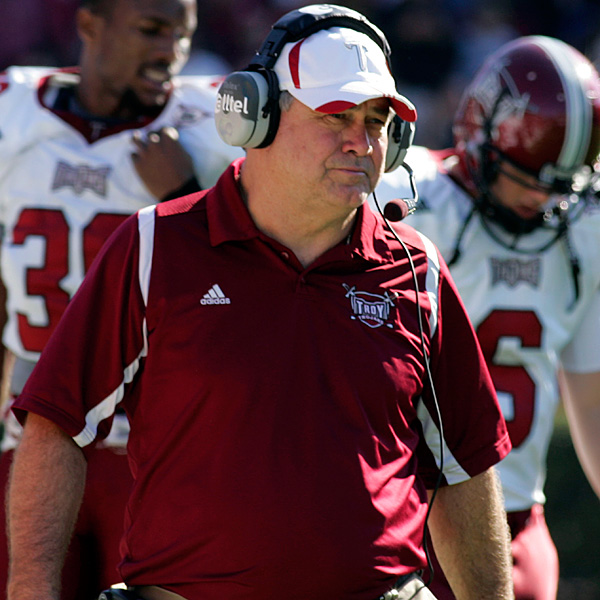


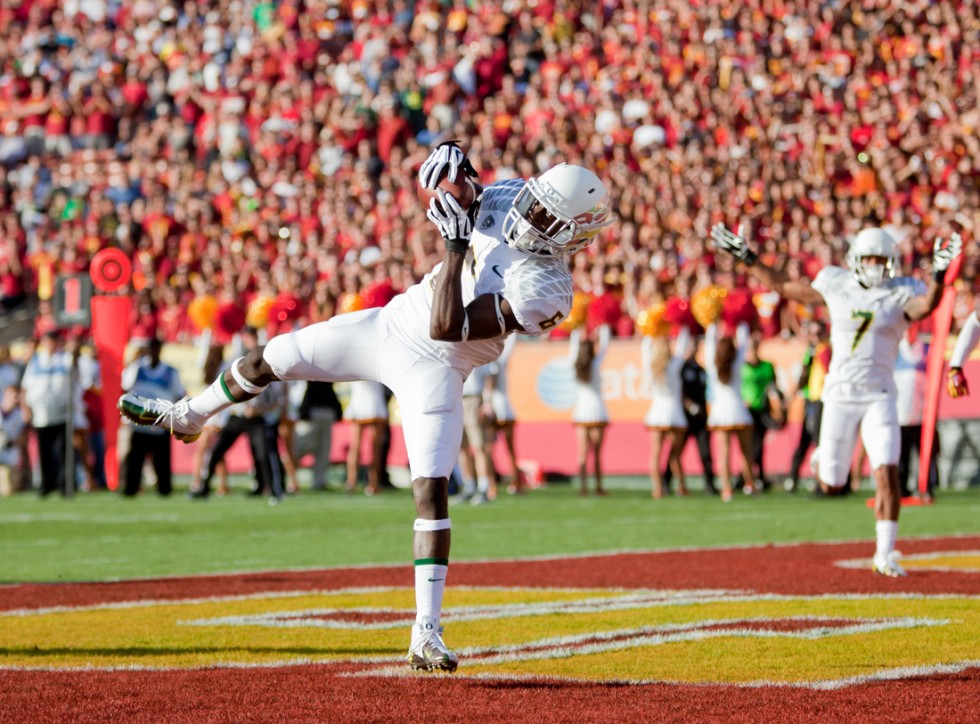

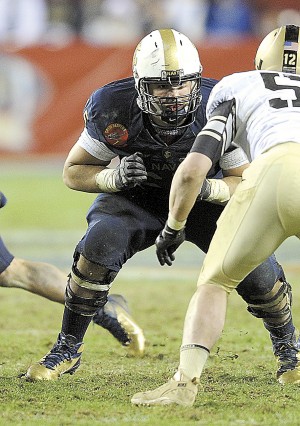


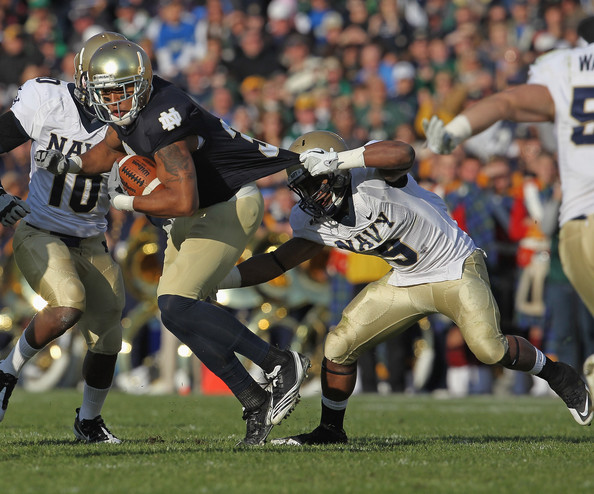
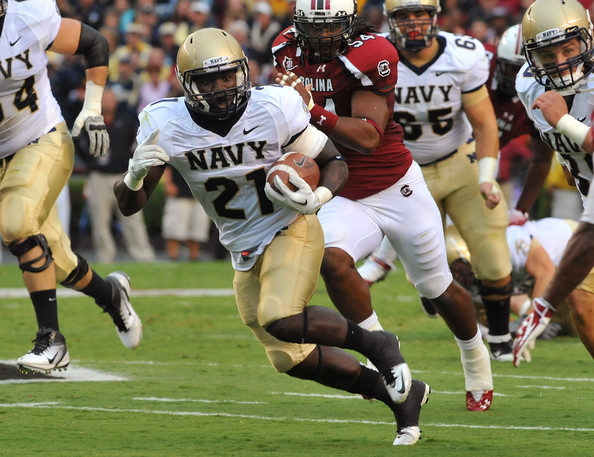

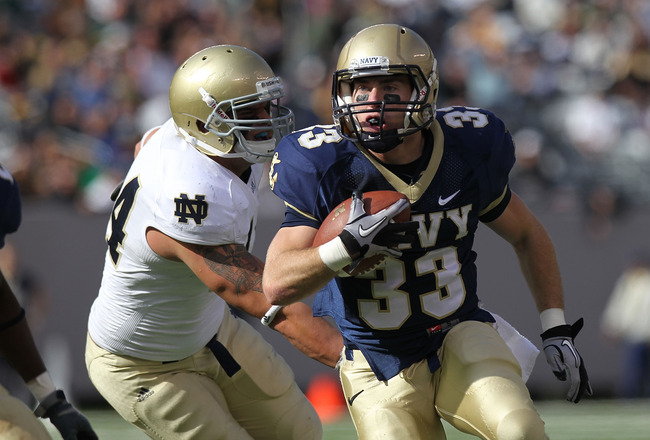


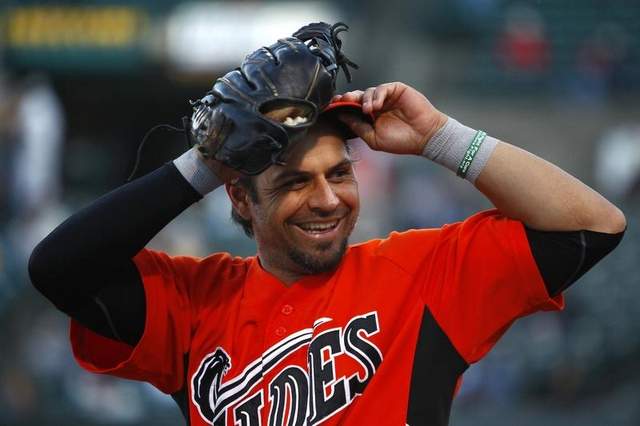


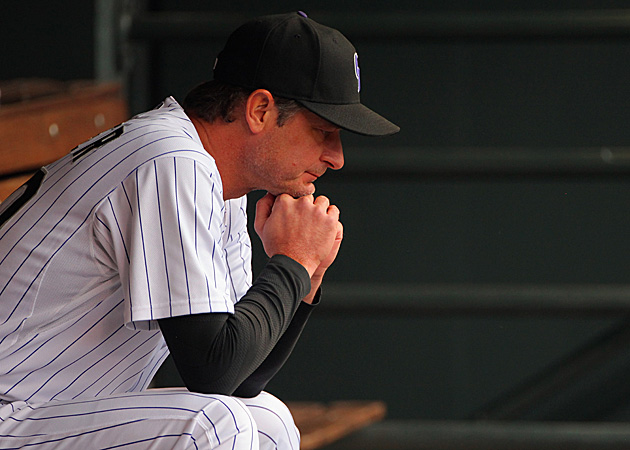
 BOB SOCCI